
The Balmoral Hotel, Edinburgh
Copyright © contact for usage rights.
The hotel everyone uses as a landmark
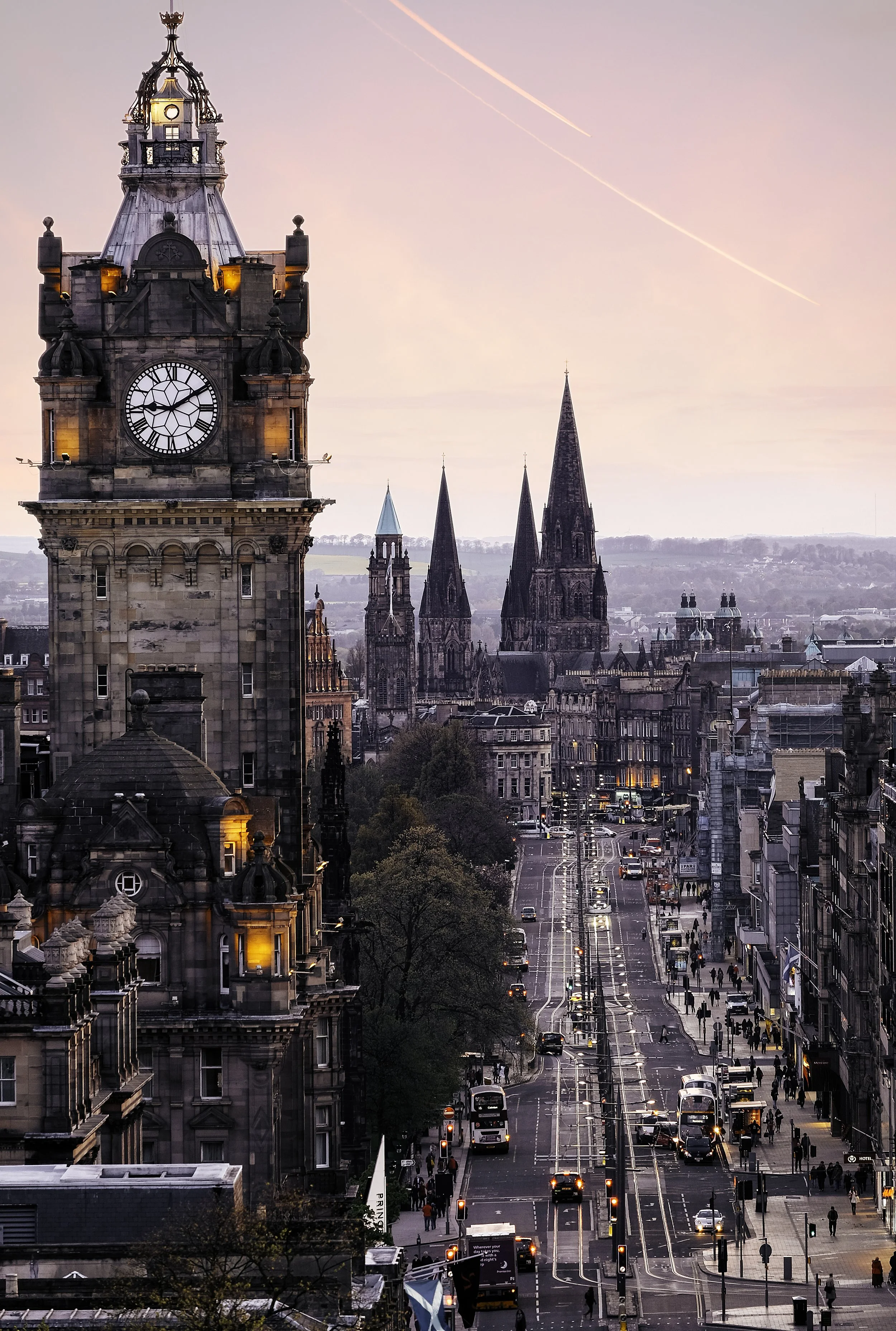
If you’ve ever given directions in Edinburgh, you’ve probably mentioned The Balmoral without really thinking about it. “Near Waverley.” “Across from the station.” “By the clock.” It’s one of those buildings that slips into everyday language, used more as a reference point than a destination.
You don’t need to have stayed there to feel familiar with it. You just need to have spent any time moving through the city centre.
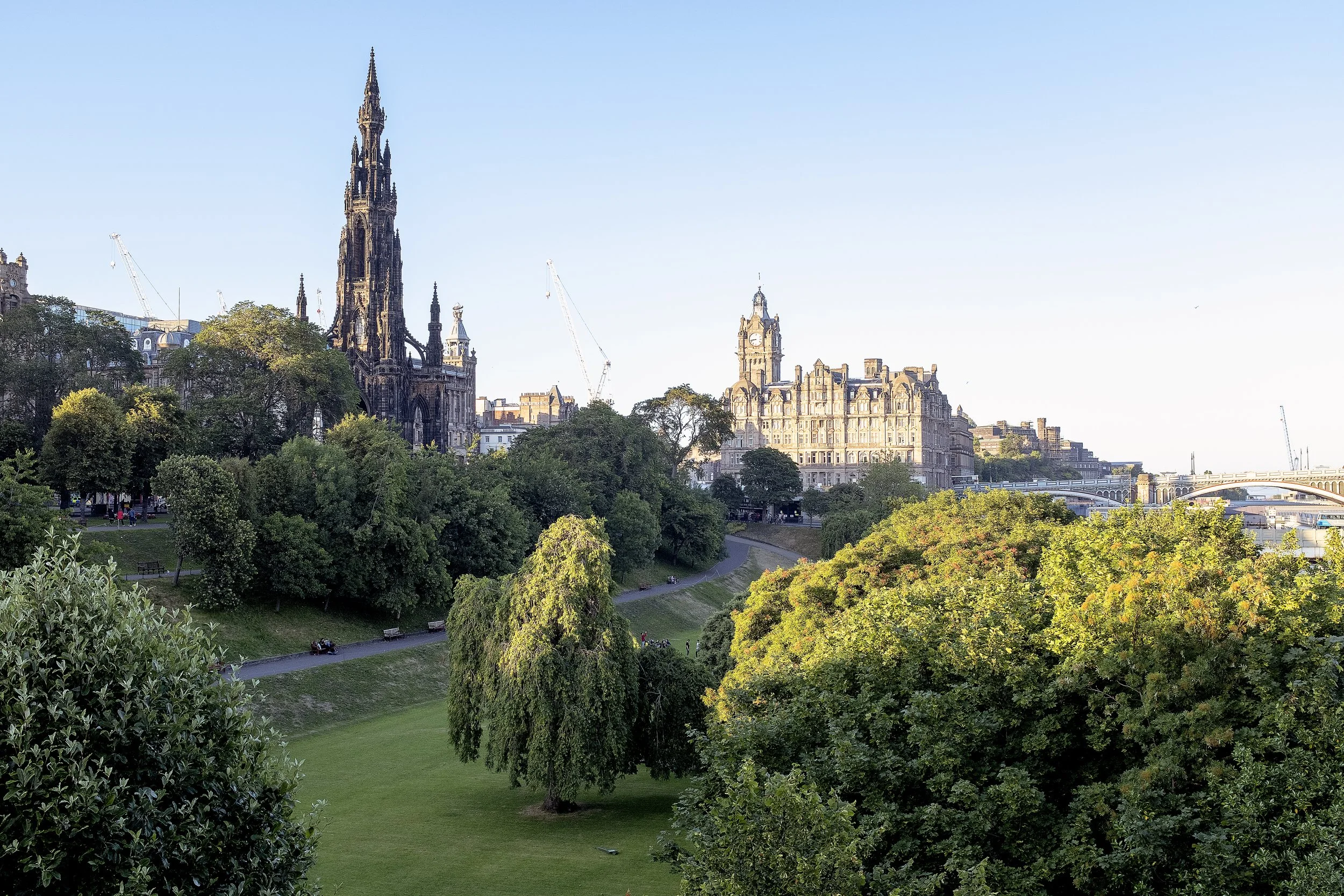
The hotel sits at the junction between old and new Edinburgh, where the ordered lines of the New Town meet the more irregular shape of the Old Town beyond the bridge. It occupies that space confidently, acting as a kind of anchor where the city changes character.
Built for people arriving by train
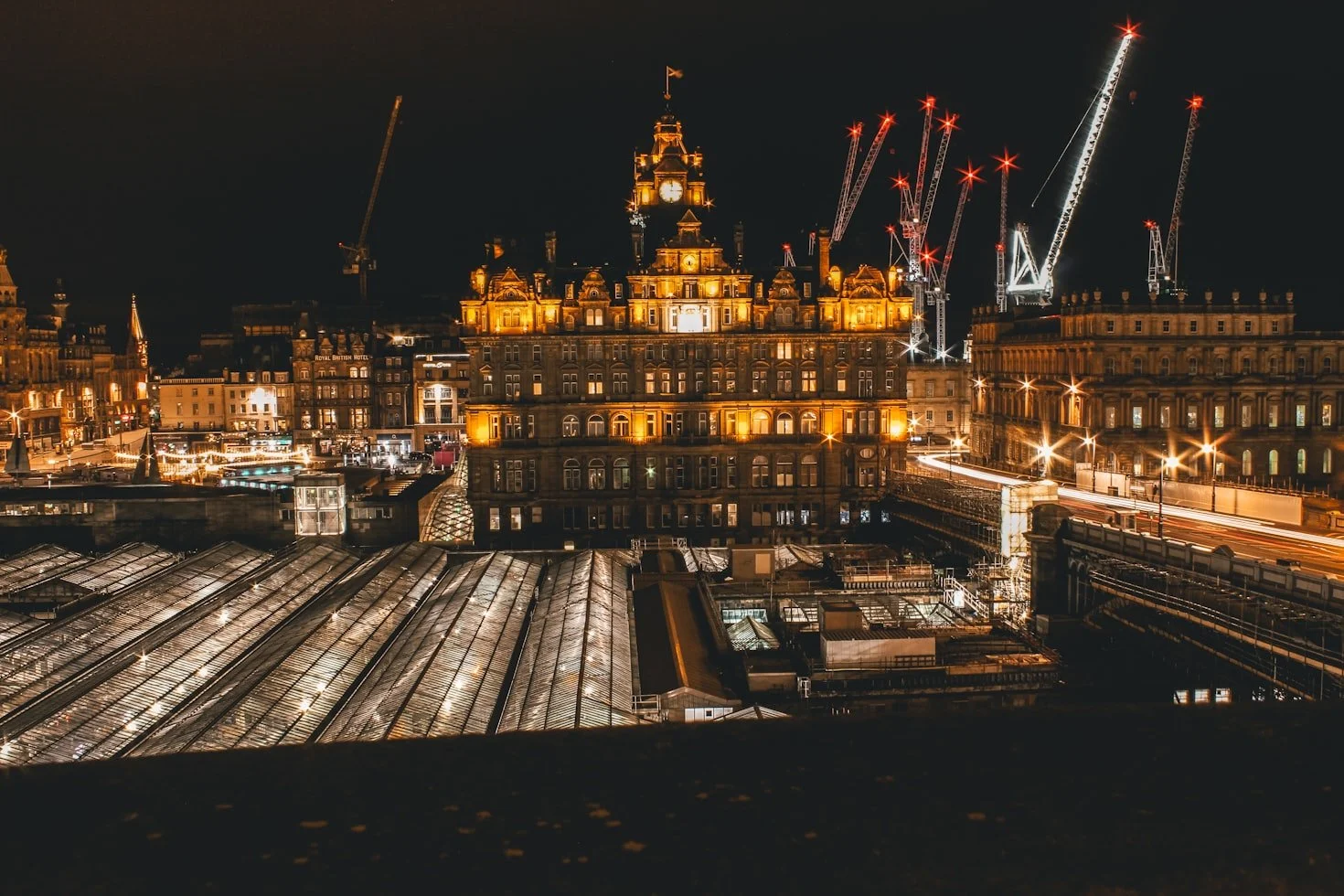
The Balmoral opened in 1902, originally named the North British Hotel. Its purpose was clear from the start. This was a hotel built for arrivals, specifically for people stepping off trains at Waverley Station who expected Edinburgh to announce itself properly.
At the turn of the 20th century, the railway was the main route into the city, and the hotel rose directly above the platforms, tall and unmistakable. It was designed to be seen immediately, offering reassurance and a sense of importance to travellers who might never have been to Edinburgh before.
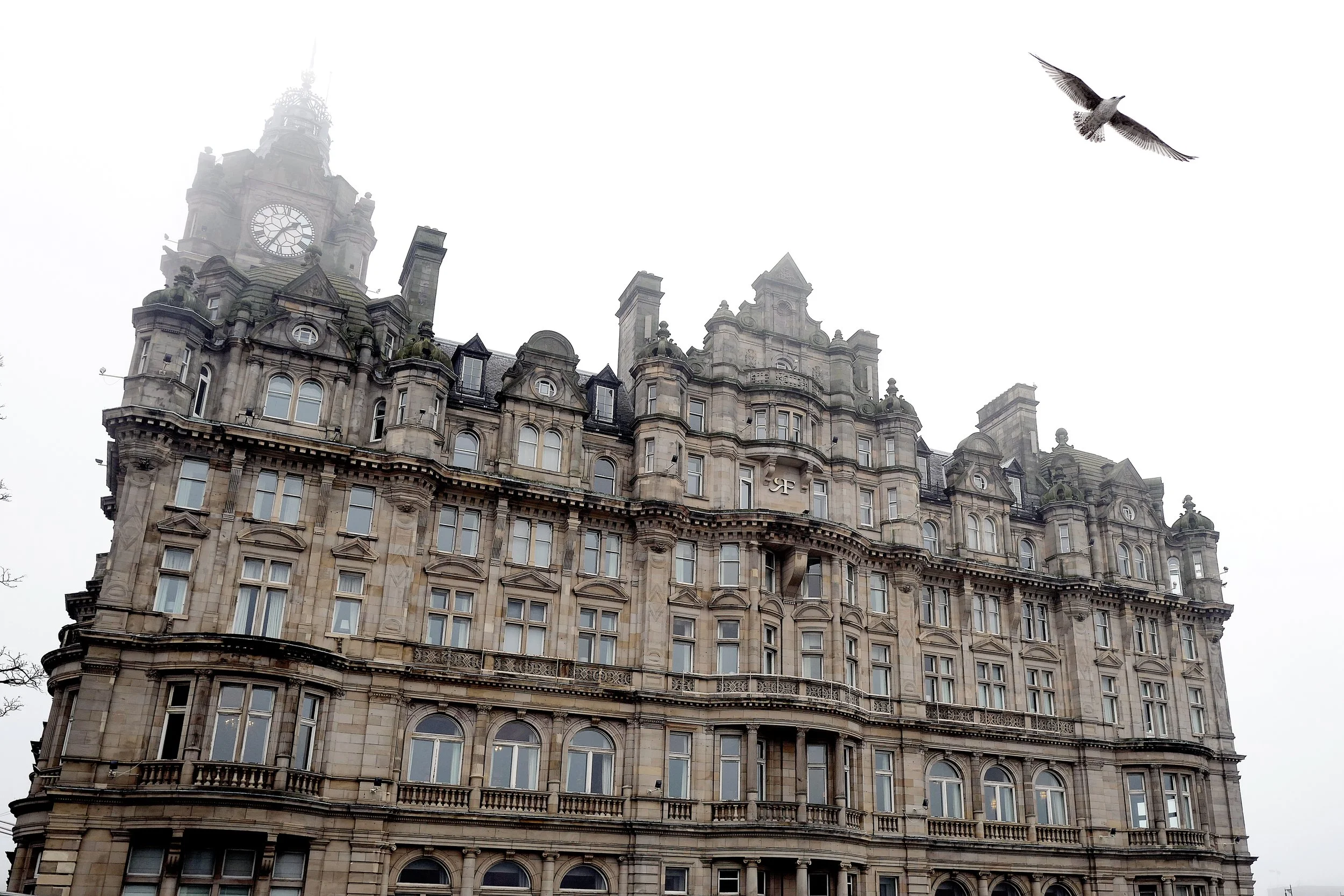
Architecturally, it leans into Scottish baronial style, with turrets, sandstone, and a slightly theatrical silhouette. It’s a deliberate nod to history, even though the building itself was very much a product of modern transport and ambition.
Copyright © contact for usage rights.
The clock that runs ahead of time
The Balmoral’s clock tower is one of the most recognisable features on Princes Street, and it has always served a practical purpose as well as a visual one. The clock runs three minutes fast, a small adjustment intended to help travellers avoid missing their trains.
In a city where distances can be deceptive and crowds unpredictable, that extra urgency made sense. Over time, the fast clock became part of the hotel’s identity, and stories grew around it. One of the most persistent is that it’s set to the correct time for just one day each year, on Hogmanay (New Year’s Eve).
Whether or not that detail is strictly accurate matters less than the fact that people keep repeating it. Like many things associated with The Balmoral, the clock sits somewhere between function and folklore.
Stepping inside
From the street, the hotel feels imposing. Inside, it’s calmer than you might expect. The sound of traffic and trains fades, softened by thick walls and heavy doors. The interiors favour dark wood, high ceilings, and warm lighting, creating spaces that encourage people to linger rather than pass straight through.
It doesn’t feel frozen in time, but it does feel insulated from the rush outside. There’s a sense that you’re meant to slow down here, even if you’ve only come in for a drink or to meet someone for an afternoon tea in Palm Court.
For a building so closely tied to arrivals and departures, it has a surprising ability to make time feel less urgent.
Copyright © contact for usage rights.
A room with literary significance
One of the hotel’s most widely known stories is tied to Room 552, where J.K. Rowling completed Harry Potter and the Deathly Hallows. To mark the moment, she left behind a signed marble bust, a quiet thank-you rather than a grand gesture. Regardless of any political views you might have of J.K. Rowling now, the hotel renamed room 552 to ‘the J.K. Rowling suite’.
The detail fits the building well. A hotel perched above a railway station, long associated with movement and endings, became the place where a lengthy story finally reached its conclusion. You don’t need to be invested in the books to appreciate the neatness of that connection.
The room itself hasn’t been preserved as a museum. It continues to function as a hotel room, used by guests who may or may not care about what was written there. Still, a good ‘selling’ point for Rocco Forte Hotels, we’re sure.
A building woven into everyday life
What makes The Balmoral interesting isn’t its luxury, or even its famous guests. It’s how thoroughly it’s been absorbed into the daily rhythms of the city. People arrange to meet beneath the clock. They use it to explain where they are. They walk past it without consciously registering it, even though it’s doing a lot of visual work.
From Princes Street, it looks out across the gardens toward the Castle. From the station below, it rises directly overhead, a reminder that Edinburgh has always paid close attention to first impressions.
Copyright © contact for usage rights.
Six facts about The Balmoral Hotel
The Balmoral opened in 1902 as the North British Hotel, built specifically for rail travellers using Waverley Station.
Its clock tower runs three minutes fast, a tradition intended to help people catch trains rather than miss them.
The clock is popularly said to show the correct time only once a year, on Hogmanay.
The building’s Scottish baronial style was a deliberate reference to national history during a period of modern expansion.
J.K. Rowling finished writing Harry Potter and the Deathly Hallows in Room 552 and later left a signed marble bust there.
Many people in Edinburgh use The Balmoral as a navigational reference long before they ever step inside.
