
Glencoe, Scottish Highlands
Where the land feels unfinished…
Copyright © contact for usage rights.
Entering a landscape that changes the rules
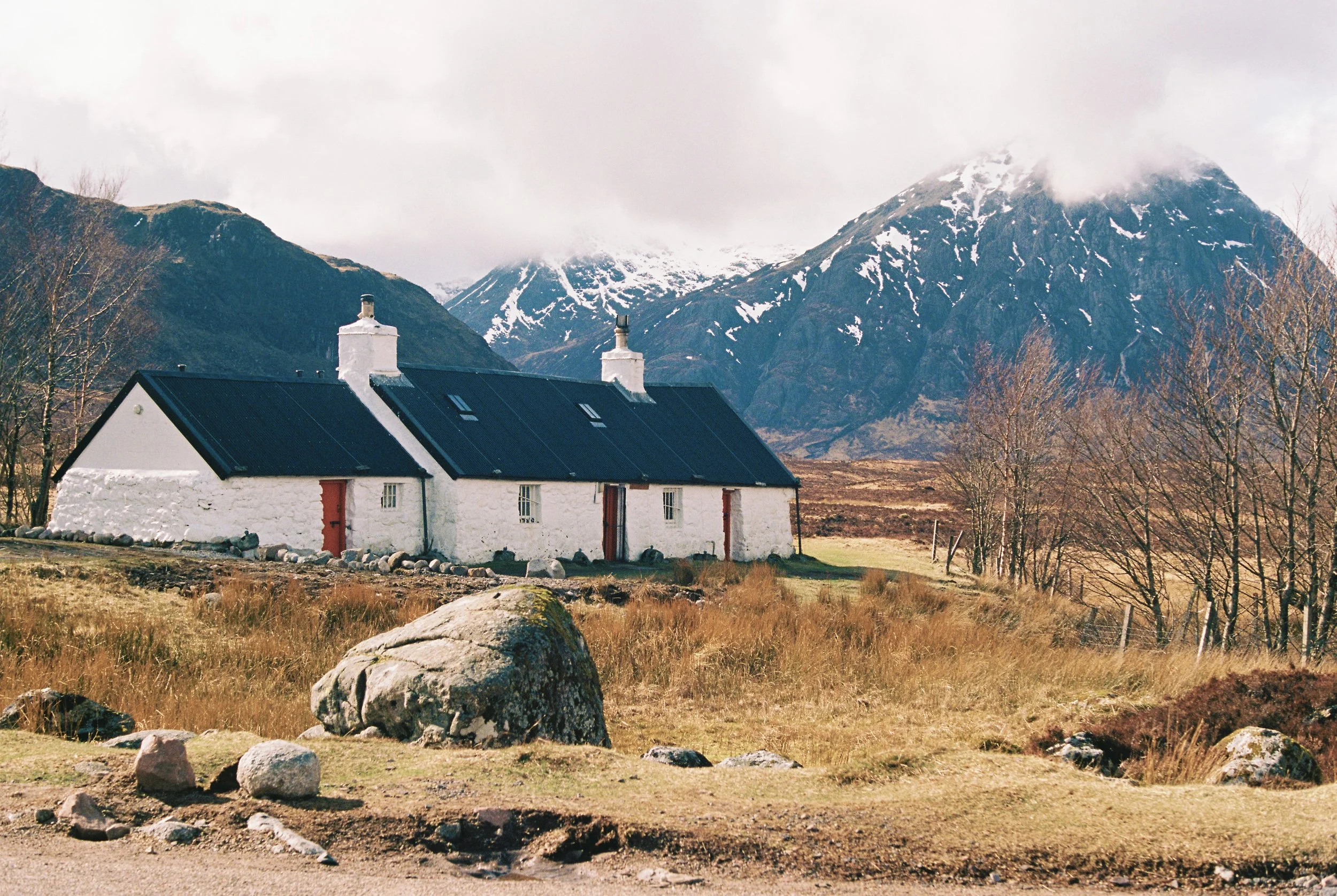
Glencoe doesn’t arrive all at once. You don’t crest a hill and see everything laid out neatly in front of you. Instead, the glen closes around the road in stages, the mountains edging closer until you realise you’re no longer looking at the landscape — you’re inside it.
There’s a sense here that the land hasn’t quite settled. The slopes are too steep, the valleys too narrow, the scale just slightly off. Even on a bright day, Glencoe carries an edge. It doesn’t feel hostile, exactly, but it does feel indifferent. You feel small (but somehow peaceful).
That feeling is what draws people back. Not the drama alone, but the way the place resists being reduced to a single viewpoint or photograph.
Copyright © contact for usage rights.
Buachaille Etive Mòr and the act of arrival
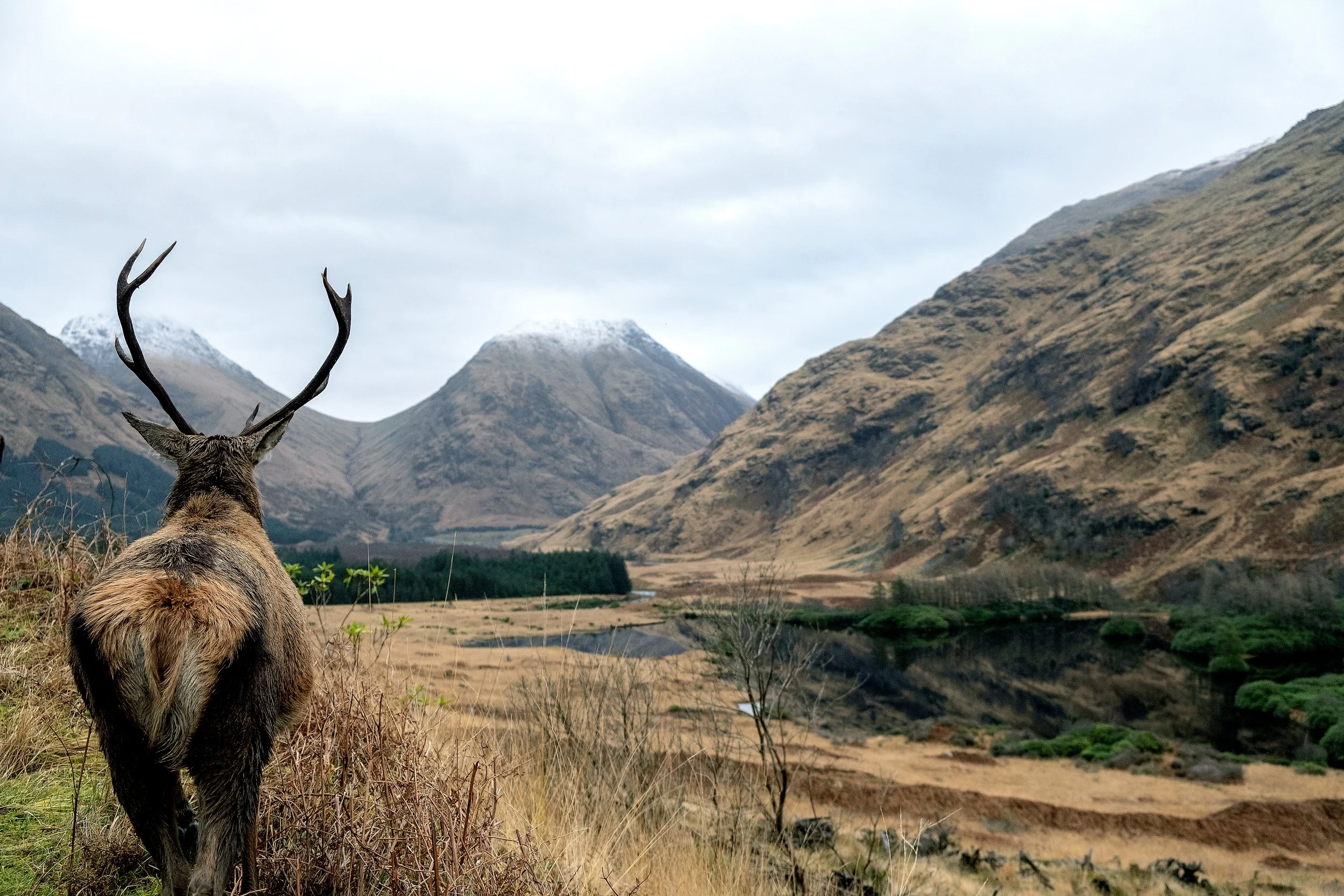
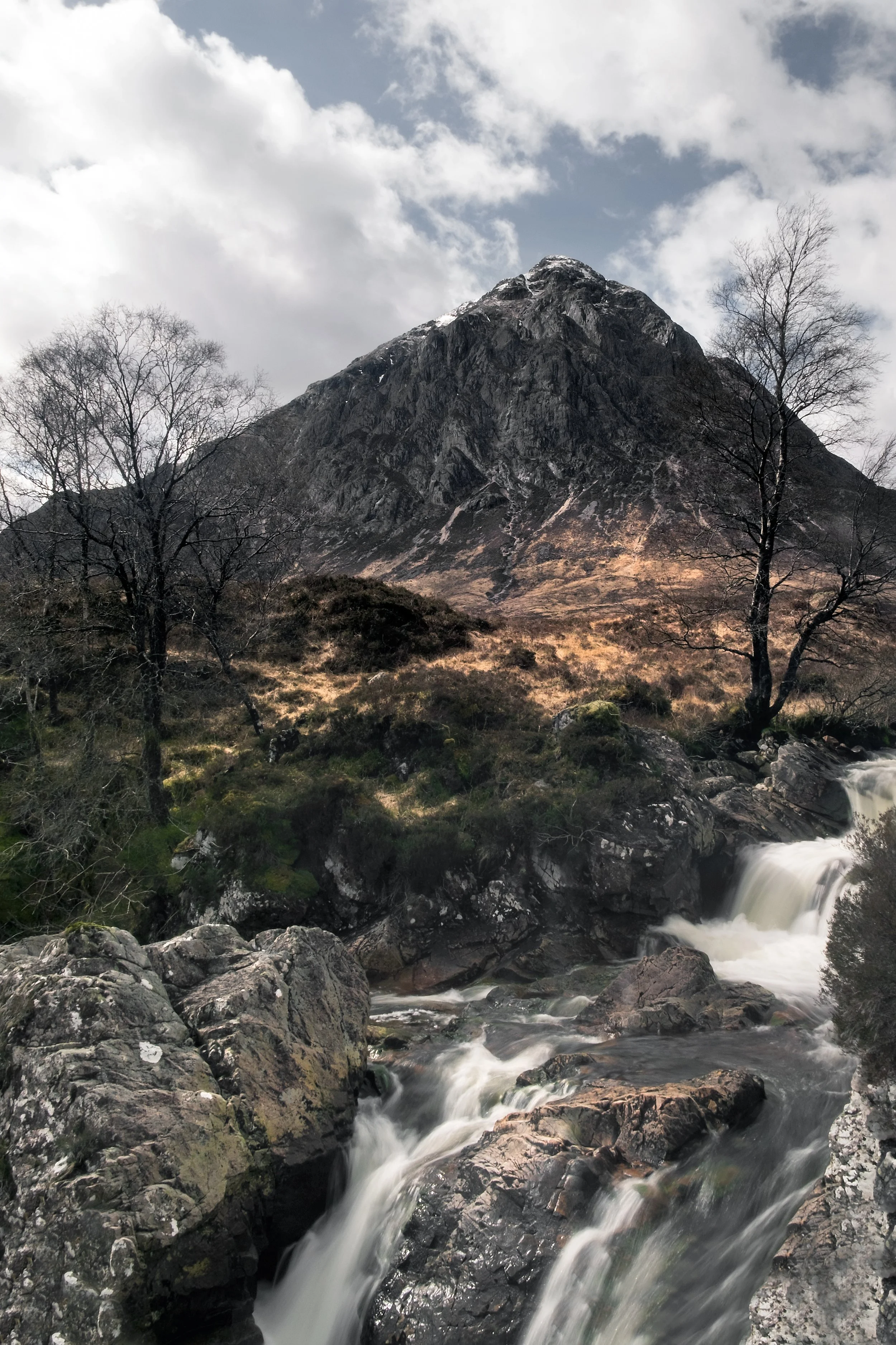
For many, Glencoe effectively begins with Buachaille Etive Mòr. The mountain rises abruptly at the head of the glen, almost architectural in shape, its ridges forming a sharp, recognisable silhouette. It’s one of the most photographed mountains in Scotland, often framed from the road as you approach from Rannoch Moor. you really need to see it to believe it – different days show it in different ways (bright and sunny days show you the textured edges and the pointed summit; dull days show it as a large, dark mass – it’s summit often hidden by cloud).
What’s striking is how sudden it feels. There’s very little build-up. One moment the land is broad and open, the next it’s dominated by this steep, imposing mass of rock. Buachaille Etive Mòr doesn’t ease you into Glencoe. It announces that you’re crossing into a different kind of space.
Climbers are drawn to it, but you don’t need to leave the roadside to feel its presence. It sets the tone for everything that follows.
Copyright © contact for usage rights.
The Three Sisters, and learning to look past them
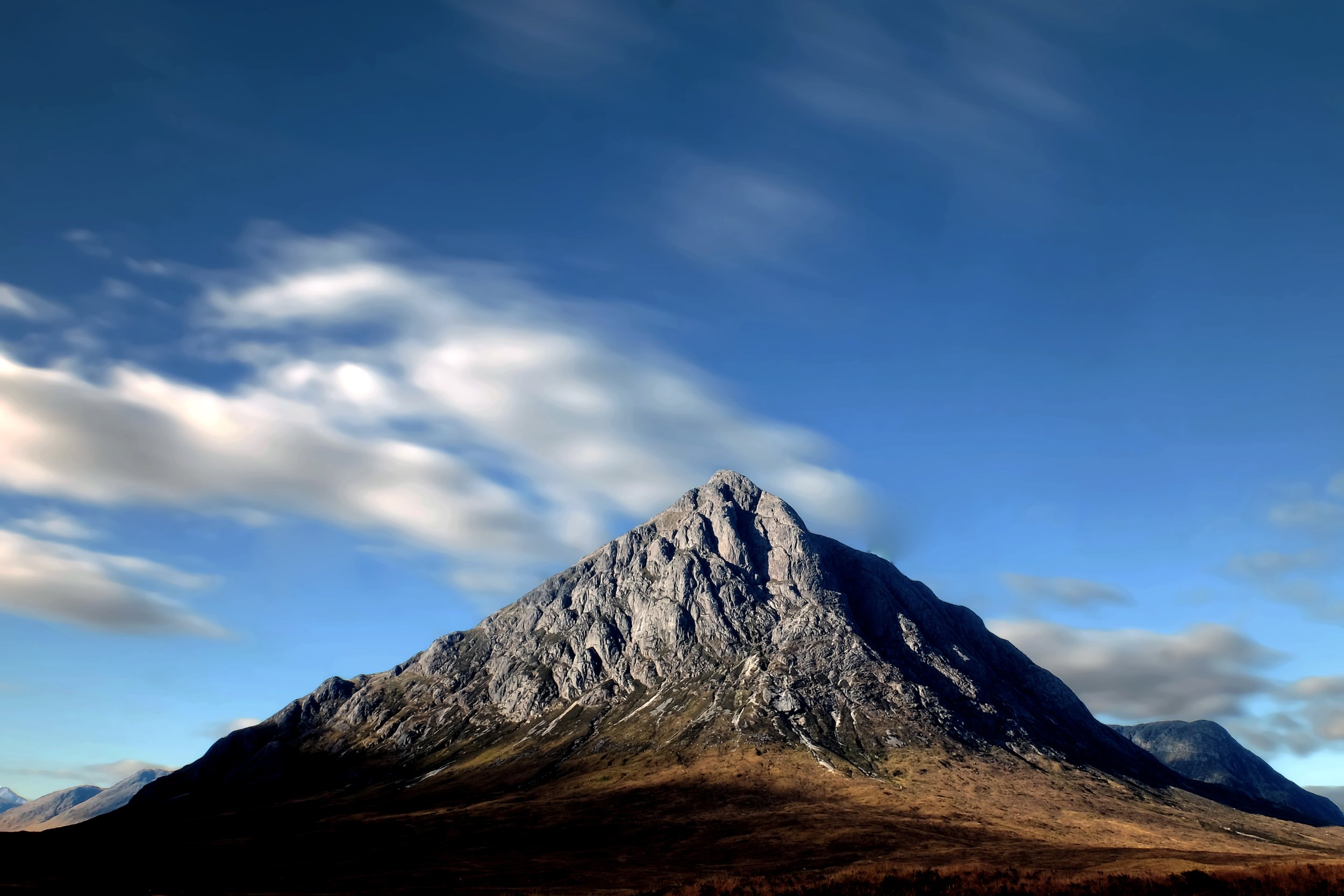
The Three Sisters of Glencoe are unavoidable. Their long ridges cut down the mountainside in clean lines, catching light and shadow in a way that photographers love. They’re the image most people associate with the glen, and they’re often the first place visitors stop.
What’s easy to miss is how quickly the atmosphere changes once you step away from the lay-bys. Walk even a short distance into the valley floor and the road noise drops away. The land opens slightly, the scale becomes easier to read, and the Sisters stop feeling like a spectacle and start behaving like part of a wider system of ridges, burns, and hidden corries.
Copyright © contact for usage rights.
Small places that don’t announce themselves
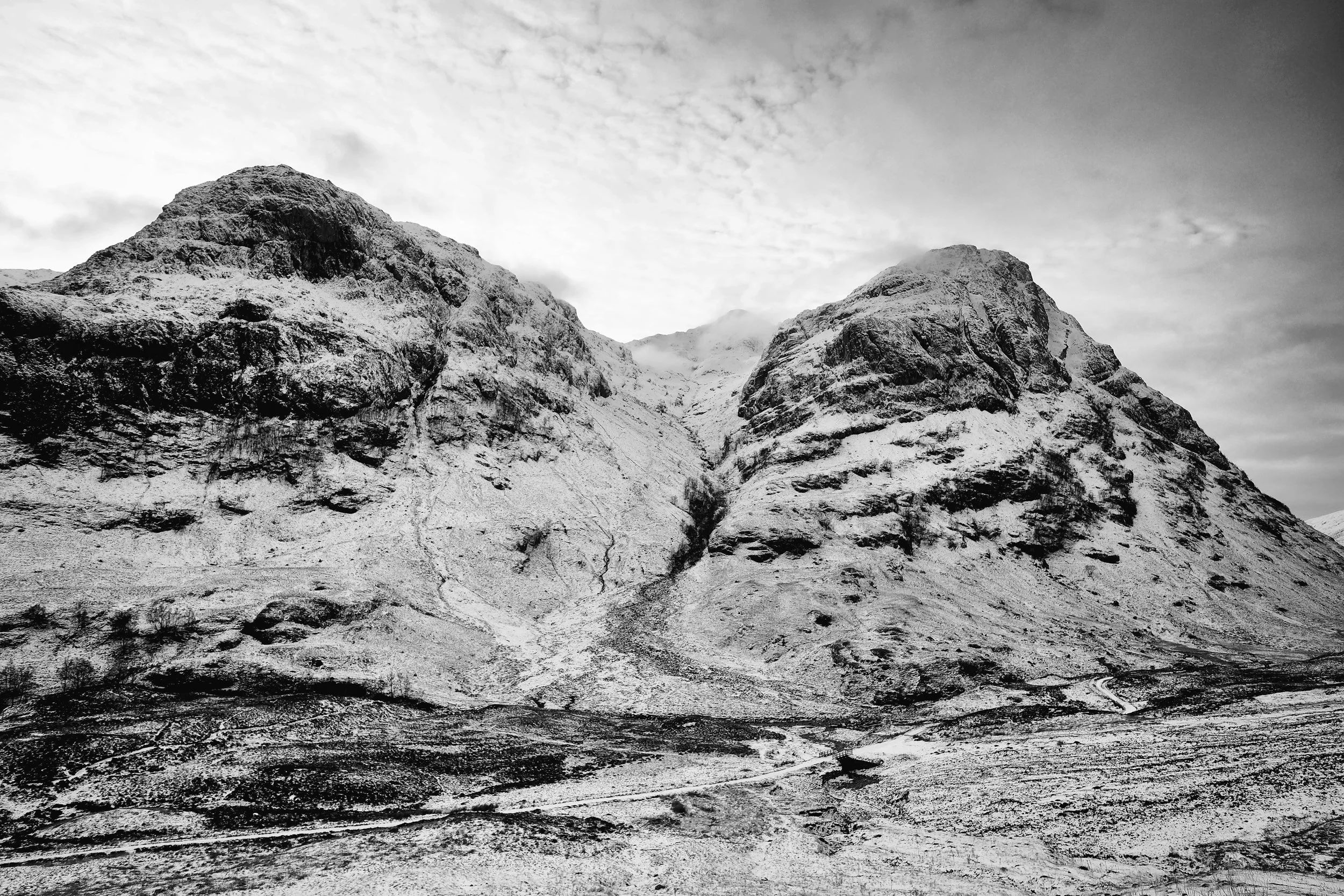
Some of Glencoe’s most memorable moments come from places that aren’t named on signs or highlighted on maps. Short, unofficial pull-ins where the land flattens just enough to park. Faint paths that follow a burn uphill before fading back into grass and rock.
There are stretches along the River Coe where the water slows and widens, creating quiet pockets that feel removed from the main glen even though the road is still close by. Old stone walls appear unexpectedly, marking boundaries that no longer seem relevant. In places, the land carries scars of past settlement, but without explanation or context boards to spell it out.
These aren’t secret locations. They’re simply places you notice when you stop treating Glencoe as something to pass through efficiently.
Copyright © contact for usage rights.
Glen Etive and the long way in
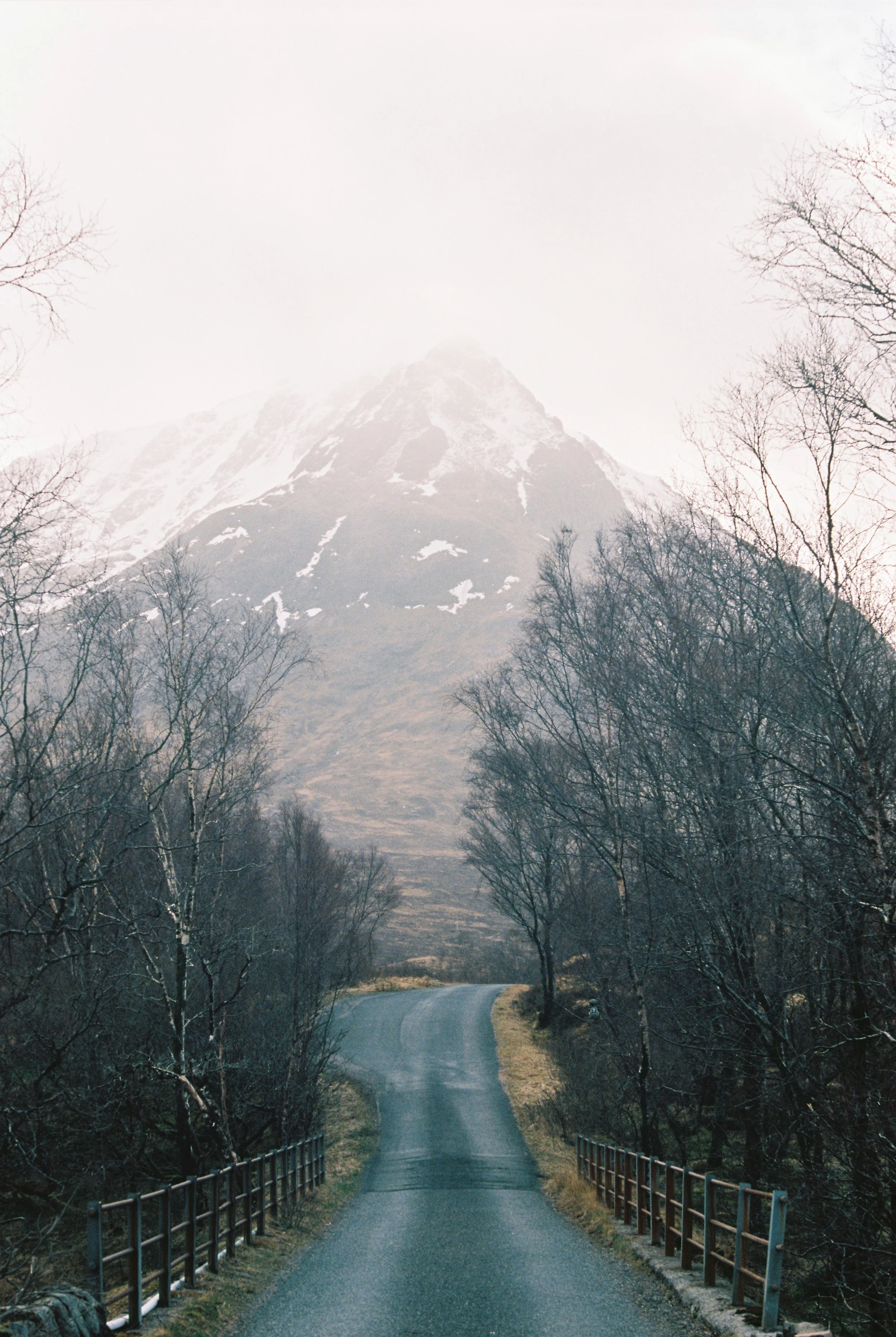
Turning off into Glen Etive feels like stepping sideways out of Glencoe’s main narrative. The road narrows almost immediately, following the River Etive as it winds south. The sense of enclosure increases, the hillsides pressing closer as the glen stretches on.
This is a place that encourages lingering. There are plenty of spots where you can stop beside the river without feeling like you’re intruding. On calm days, the water reflects the surrounding slopes with near-perfect clarity. On rougher days, the sound of it fills the glen completely.
Glen Etive has appeared in films, most notably as a backdrop in Skyfall, but the association feels almost incidental. The glen doesn’t perform for the camera. It simply exists, and the camera benefits.
Copyright © contact for usage rights.
Rannoch Moor and the sense of exposure
Rannoch Moor marks a shift in mood. Leaving Glencoe behind, the enclosing walls fall away and the land spreads out in all directions. Lochans dot the surface, the ground dark and waterlogged in places, the horizon hard to define.
On misty days, the moor feels otherworldly. Distances become unreliable. Sounds travel strangely. It’s easy to see why this landscape has been used repeatedly in film and television, standing in for places that are meant to feel remote, untamed, or slightly unreal.
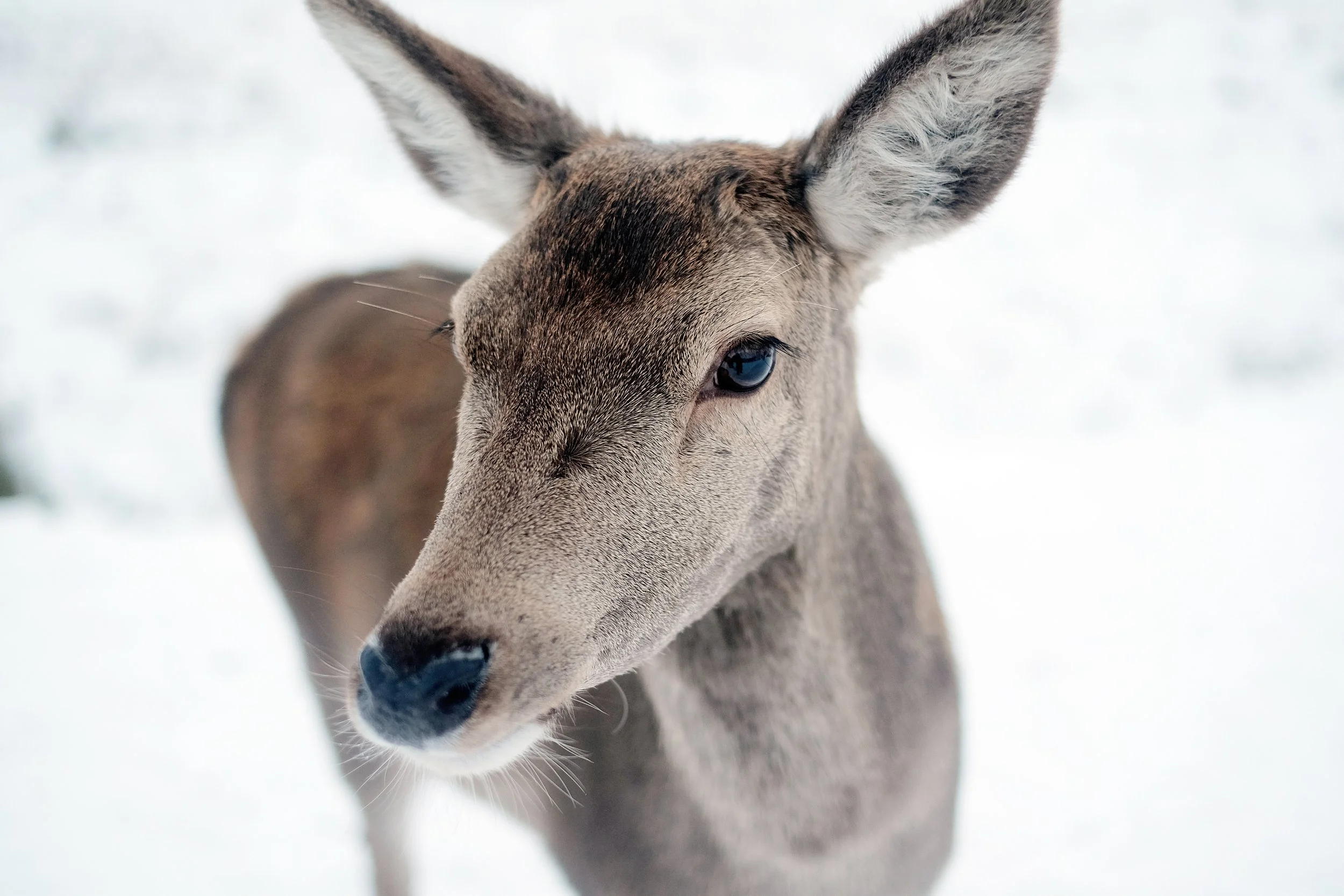
Despite its appearance, Rannoch Moor is alive. Deer move through the lower ground. Birds of prey circle overhead. In quieter moments, you might spot mountain hares or catch sight of a golden eagle if you’re lucky.
Copyright © contact for usage rights.
A landscape shaped by filming and by wildlife
Glencoe and its surroundings have featured in countless productions, from Monty Python and the Holy Grail to Harry Potter, Braveheart, and Skyfall. Directors return here because the landscape doesn’t need much dressing. It already carries atmosphere.
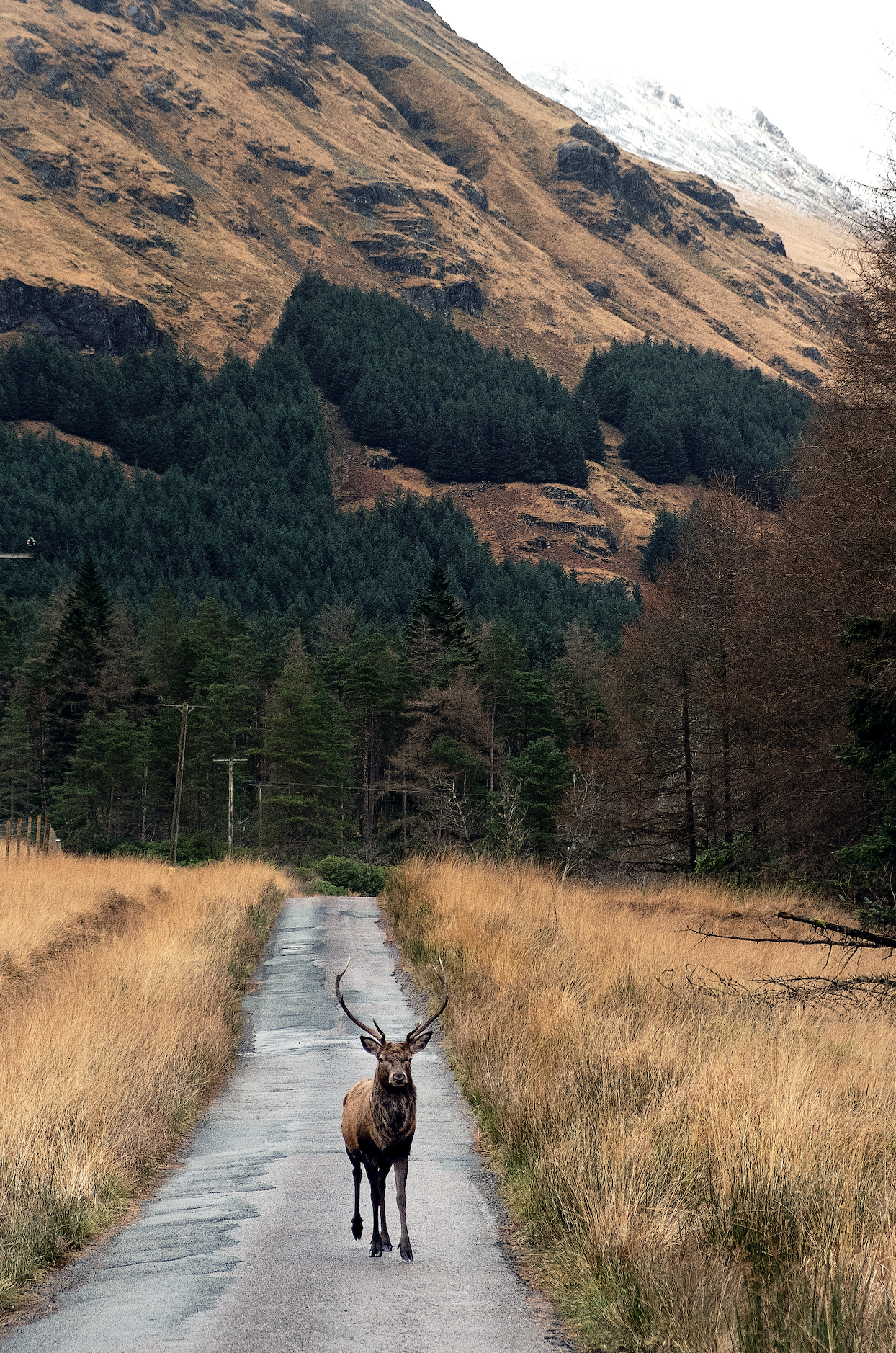
But away from cameras, it’s the wildlife that reminds you this isn’t a static place. Deer are a constant presence, especially in the quieter glens. Foxes and pine martens are harder to spot but very much part of the ecosystem. Birdlife changes with the seasons, from ptarmigan higher up to curlews and skylarks on the moor.
You’re never quite alone here, even when it feels that way.
Copyright © contact for usage rights.
Clans, loyalty, and a memory that never quite faded
It’s impossible to spend time in Glencoe without brushing up against its clan history, even if you don’t go looking for it. The landscape carries that weight quietly, folded into place names, local stories, and the way certain events are still referenced centuries later.
Glencoe was traditionally the territory of the MacDonalds of Glencoe, a branch of one of the most powerful clans in the Highlands. Like many Highland clans, their history was shaped by shifting alliances, loyalty to the Crown, and long-running rivalries with neighbouring families. None of this was unusual for the time. What happened in 1692 was.
In February of that year, government troops, many of them associated with the Campbells, were billeted with the MacDonalds under the accepted customs of Highland hospitality. After days of being fed and sheltered, the soldiers received orders to kill their hosts. At least 38 MacDonalds were murdered, with more dying later from exposure after fleeing into the winter landscape.
What shocked people, even by the standards of the period, wasn’t just the violence. It was the betrayal. Hospitality in the Highlands wasn’t symbolic. It was binding. Breaking it cut deeper than any political dispute.
The massacre became a defining moment, not only for the MacDonalds but for Glencoe itself. It’s remembered less as a battle and more as a moral rupture, something that violated an unwritten code the landscape still seems to echo.
That memory hasn’t disappeared. Even now, you’ll occasionally see pub signs or notices jokingly declaring “No Campbells”, very much tongue in cheek, but rooted in a story people still recognise. The humour works because everyone understands the reference. It’s less about modern grievance and more about acknowledging how long these stories last.
Knowing this history doesn’t change how the mountains look, but it does change how they feel. The narrowness of the glen, the way weather can close in quickly, the difficulty of escape in winter — all of it becomes easier to imagine. The landscape stops being abstract and starts to feel personal.
Glencoe isn’t unique in carrying clan history, but it’s one of the places where that past never quite settled into the background. It remains part of how the area is talked about, remembered, and understood, woven into the land rather than preserved behind glass.
Why this place stays with you
Glencoe doesn’t give you a single emotion to take away. Some days it feels heavy and inward-looking. Other days it feels expansive, even generous. The weather plays a role, but so does your own pace.
This is a landscape that resists completion. You don’t leave feeling like you’ve done it properly. You leave knowing that you’ve only seen a version of it, shaped by light, weather, and how much time you allowed yourself.
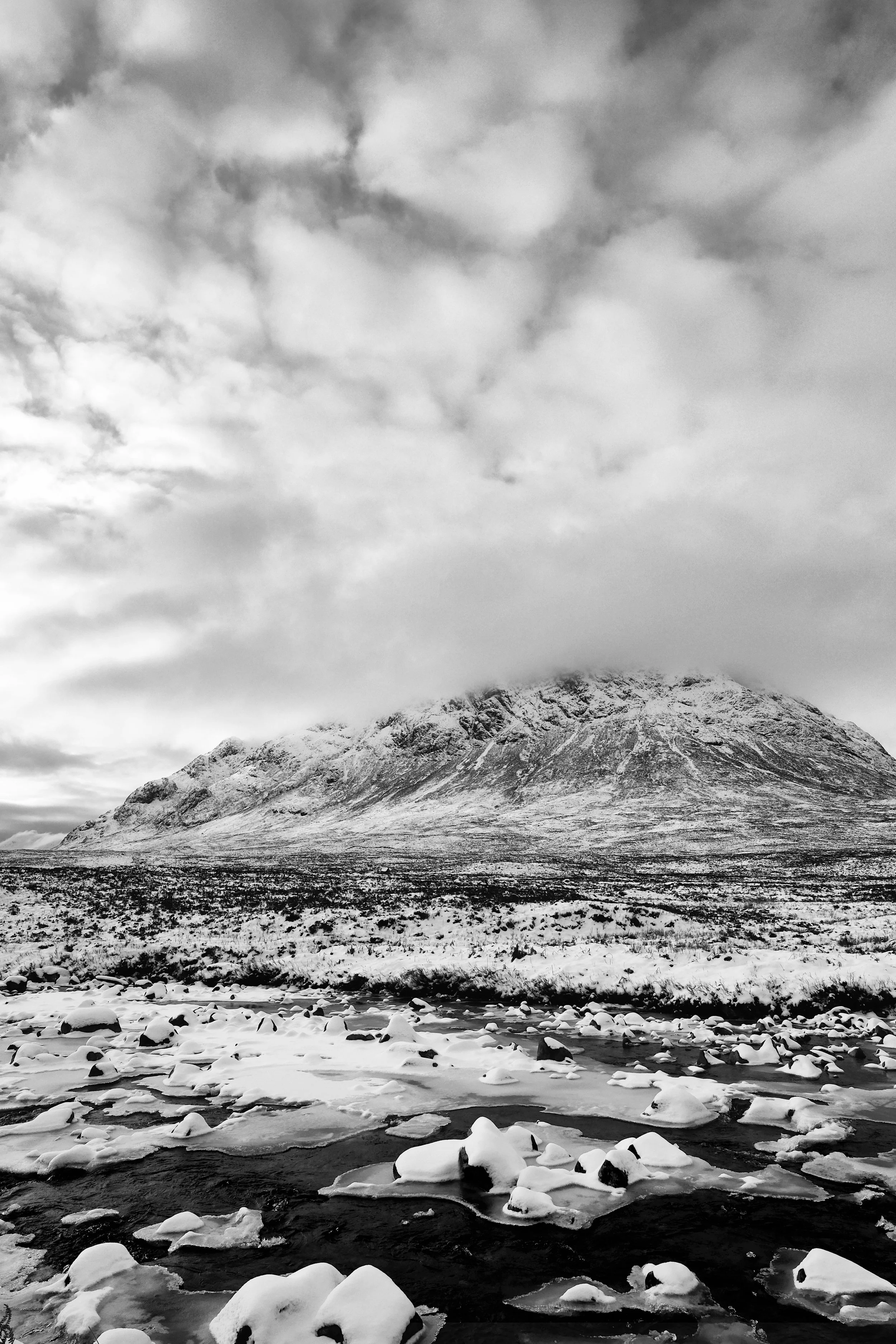
Copyright © contact for usage rights.
Six facts about Glencoe and its surrounding landscapes
Glencoe was formed by ancient volcanic activity and later carved by glaciers, giving it its steep sides and narrow floor.
Buachaille Etive Mòr stands at the eastern entrance to the glen and is one of the most recognisable mountains in Scotland.
Glen Etive runs for over 30km and remains largely undeveloped, with much of its land designated for conservation.
Rannoch Moor is one of the largest remaining wilderness areas in Britain, home to rare plants, birds, and mammals.
The area has been used extensively in film and television due to its dramatic, largely unchanged landscape.
Many of Glencoe’s quietest and most memorable spots are visible from the road, but only if you’re willing to slow down.
