
St Giles’ Cathedral, Edinburgh
Copyright © contact for usage rights.
The building you keep walking past
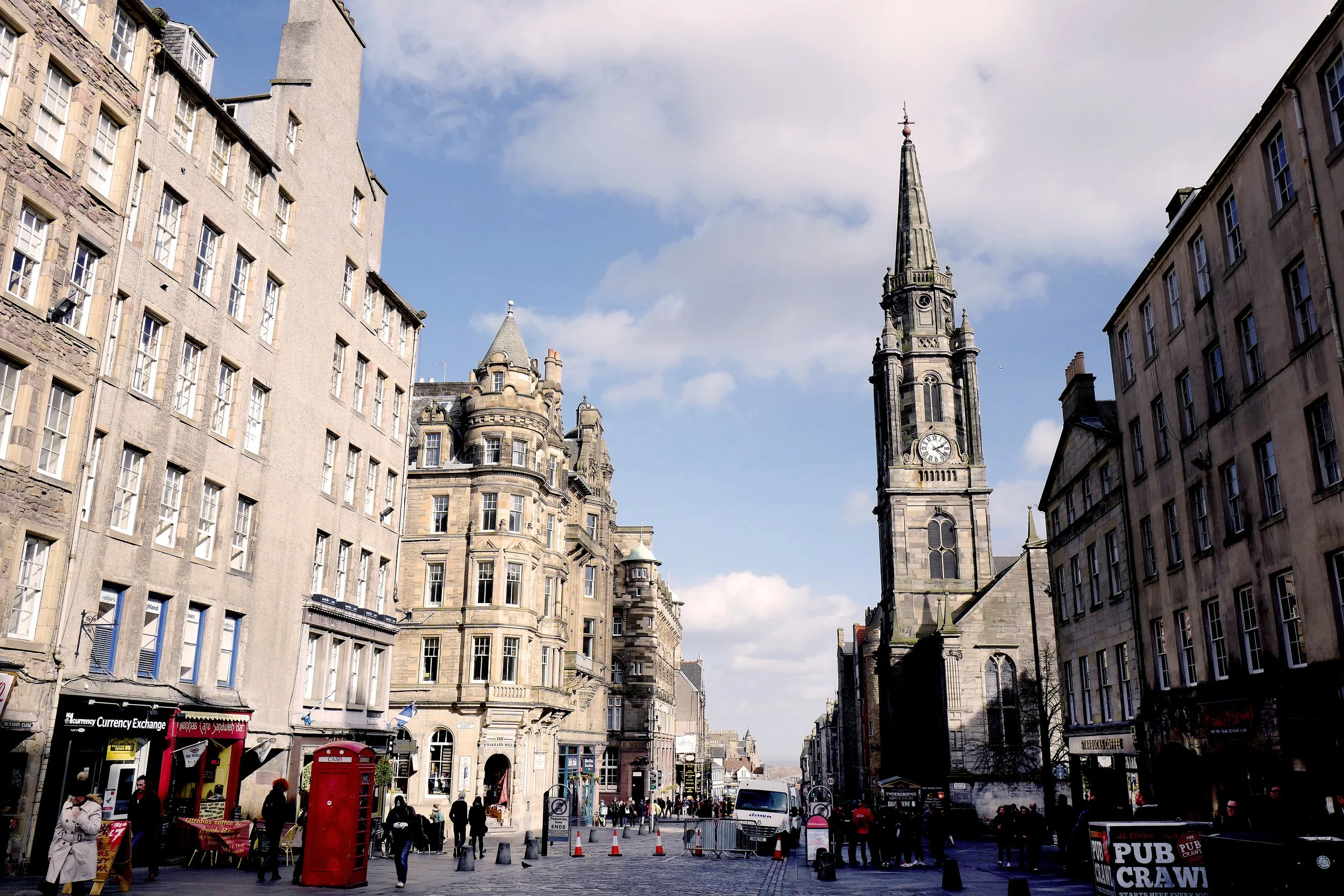
If you spend any time on the Royal Mile (in Edinburgh), St Giles’ Cathedral becomes part of the scenery. It’s always there, sitting slightly back from the pavement, steady and unbothered by the crowds moving past it. You register the crown spire without really looking up. You tell yourself you’ll go in one day, when you’re not in a rush.
But St Giles isn’t the kind of place that rewards being rushed. It’s been at the centre of Edinburgh for close to a thousand years, watching the city change shape around it. Markets, protests, sermons, executions, celebrations — all of it happened within shouting distance of these walls. It’s less a single building than a long-running witness.
Copyright © contact for usage rights.
A church shaped by argument
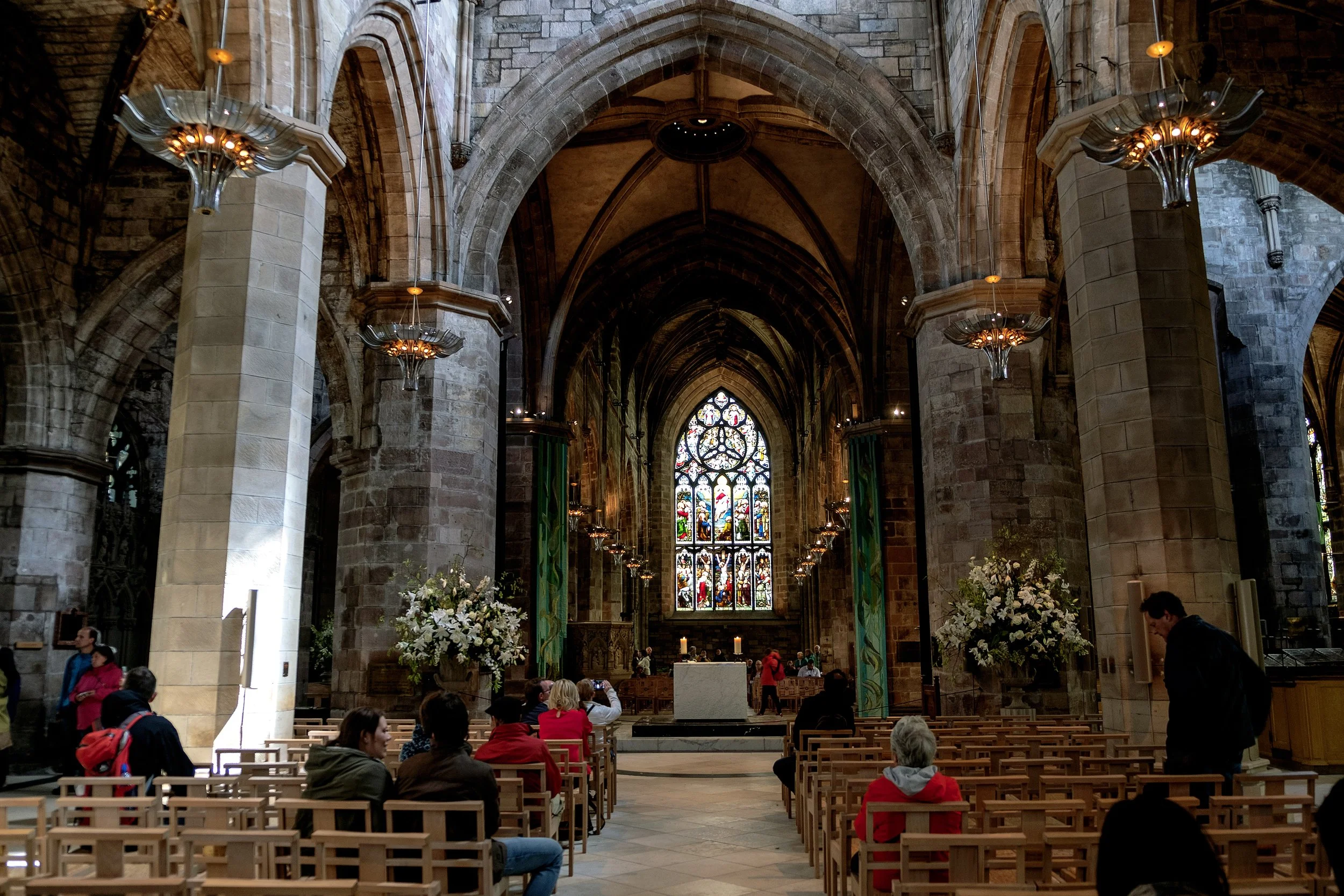
St Giles has never had an easy history. Fires damaged it. Reformers stripped it back. Different factions fought over how it should be used and what it should represent. At one point, it was divided internally and used by multiple congregations at the same time, partitioned like a shared flat rather than a grand house of worship.
John Knox preached here during the Scottish Reformation, and his sermons were anything but neutral. This was a place where religion, politics, and public life collided, often noisily. What survives today reflects that. The layout isn’t neat or symmetrical. Chapels branch off unexpectedly. Memorials from different centuries jostle for space. The building feels added to rather than finished.
Copyright © contact for usage rights.
Inside, away from the Royal Mile
Step through the doors and the Royal Mile doesn’t disappear so much as recede. The sound drops, the air feels cooler, and the sense of constant movement outside gives way to something slower.
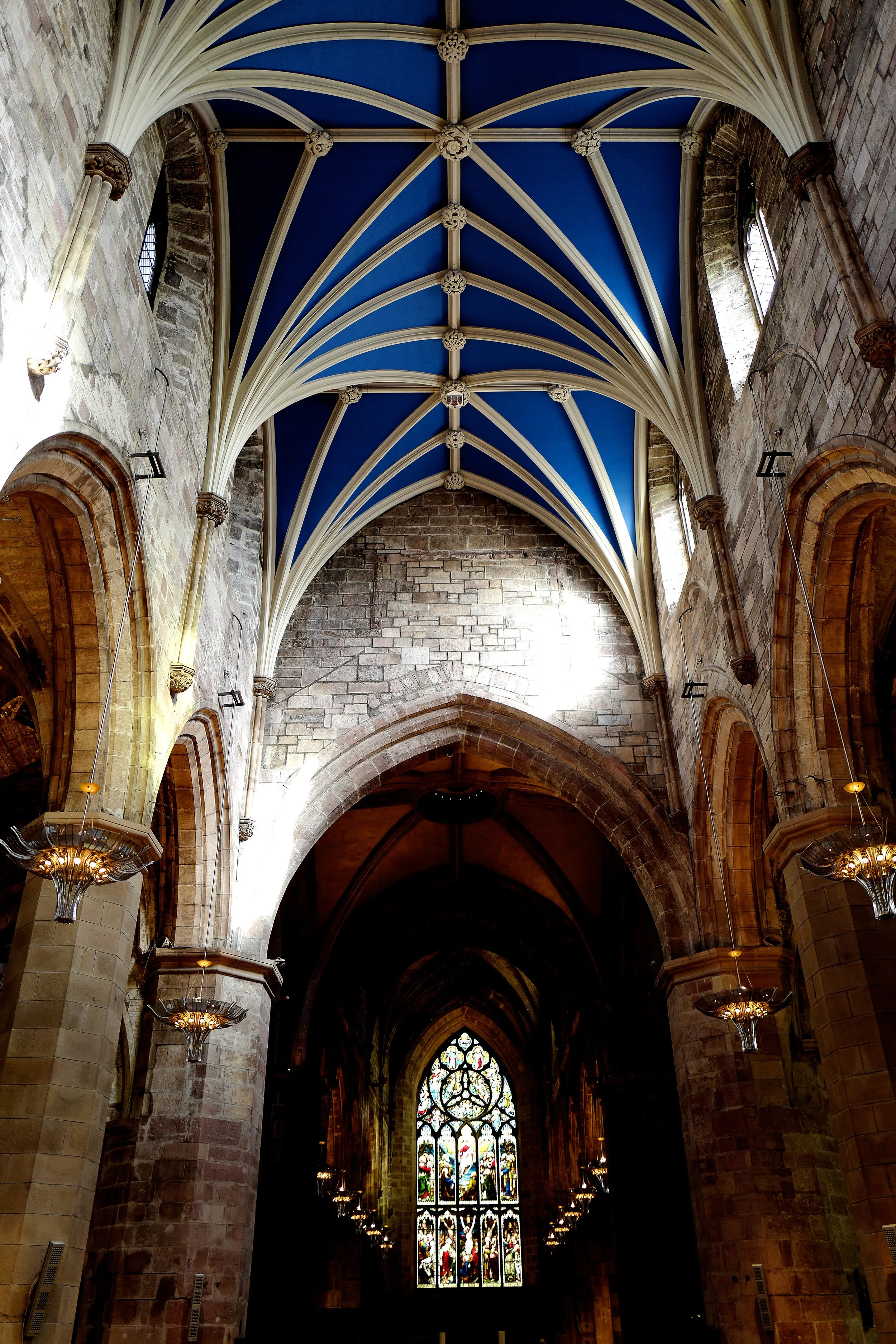
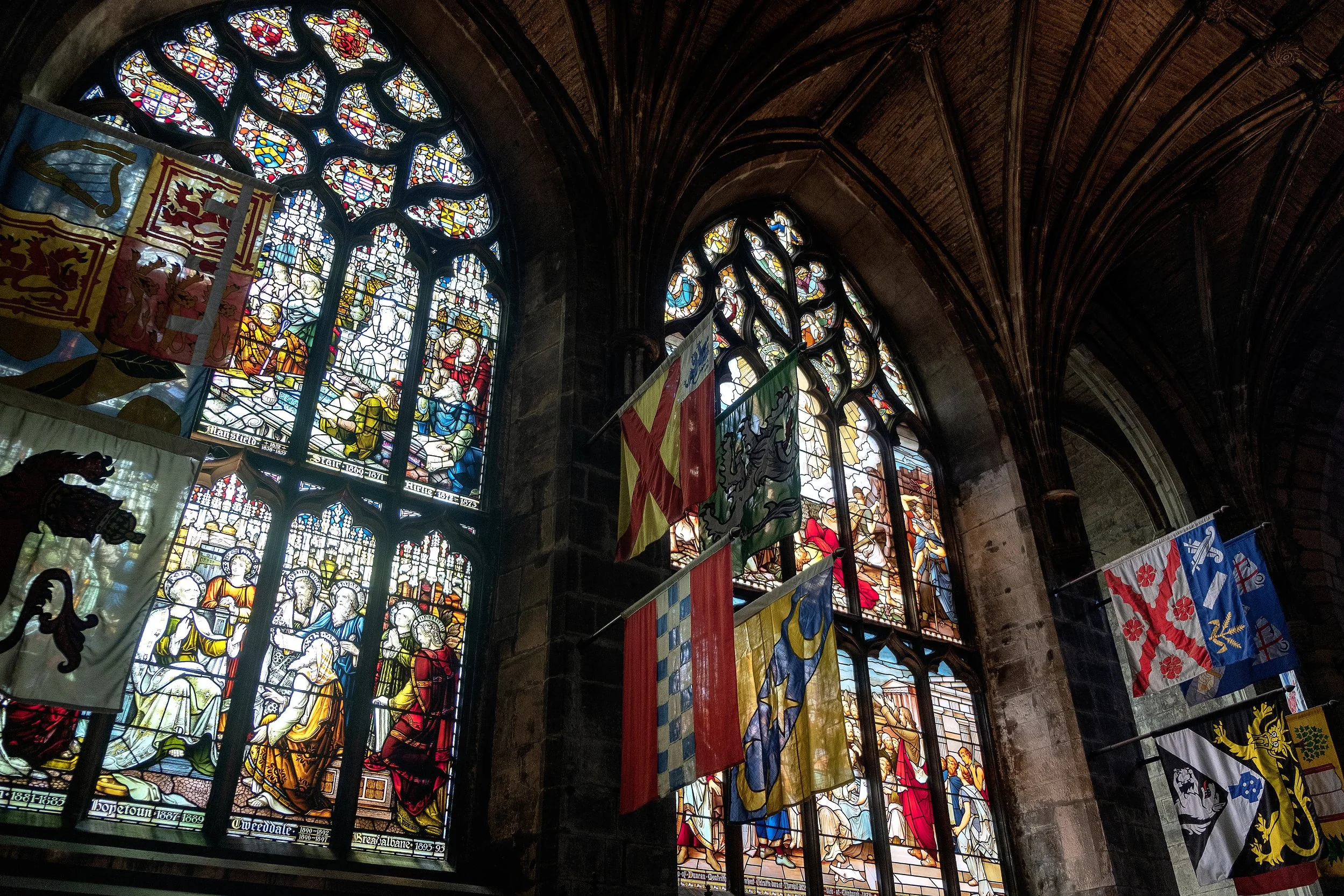
The ceiling is higher than it looks from the street, supported by pillars that feel purposeful rather than decorative. Light comes in through stained glass in patches, shifting as the day moves on. People tend to lower their voices instinctively, not because there’s a rule, but because the space asks for it.
You’re aware that this is somewhere people have gathered for centuries to argue, grieve, and make decisions they believed really mattered.
Copyright © contact for usage rights.
The crown on the skyline
From outside, St Giles is easiest to recognise by its crown spire. It’s one of Edinburgh’s most distinctive features, open and almost delicate compared to the solid stone below it. The design dates back to the 15th century, though it’s been rebuilt more than once after earlier versions collapsed.
It isn’t a royal symbol in the way it sometimes gets described. It’s more practical than that. For generations, it marked the centre of the city. You could navigate by it. Even now, people use it as a reference point without thinking.
Heart of Midlothian
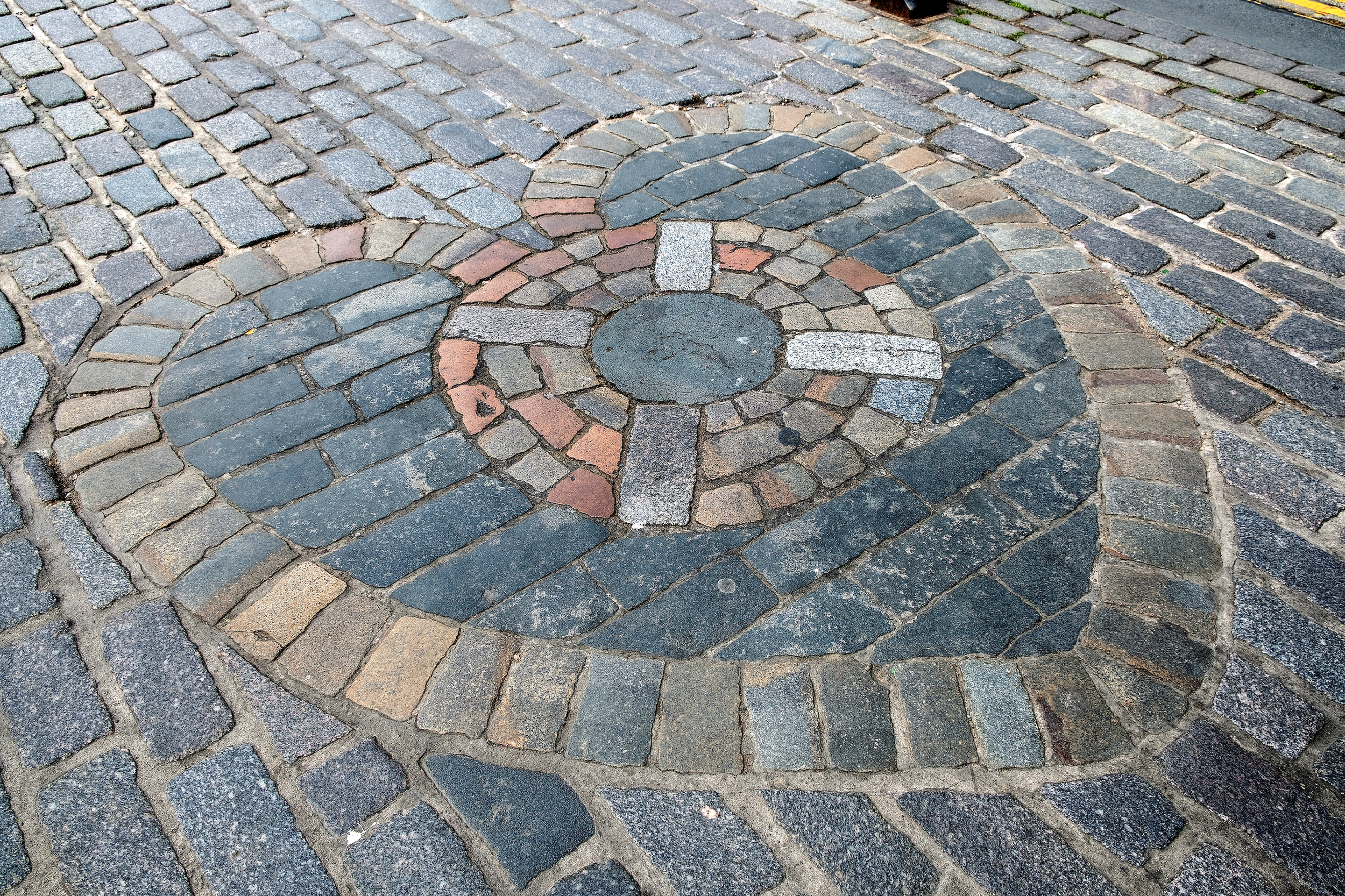
Copyright © contact for usage rights.
The heart underfoot
Just outside the cathedral, set into the cobblestones, is the Heart of Midlothian. It’s small, easy to step around, and often overlooked by people focused on the street performers or the next shop window.
The heart marks the site of the Old Tolbooth, once Edinburgh’s main prison and courthouse. It was a place associated with punishment and public executions, and it stood here until the early 19th century, when it was finally demolished. The heart was laid into the street as a marker, and it’s stayed there ever since.
A habit that refuses to die
There’s a long-standing local tradition of spitting on the heart as you pass. It tends to surprise visitors, but for locals it’s almost automatic. The gesture goes back to resentment of the Tolbooth and what it represented. Spitting was a way of showing contempt, a small act of resistance that outlasted the building itself. These days, people do it as a way of getting good luck (or so superstition says).
Most people doing it now aren’t making a point. They’re continuing a habit without ceremony or explanation. The heart takes it all on, day after day, pressed into one of the busiest stretches of pavement in the city.
What these two places say about Edinburgh
St Giles and the Heart of Midlothian sit only a few steps apart, but they tell a wider story together. One rises above the street, heavy with ceremony and memory. The other is embedded in it, walked over, ignored, occasionally spat on.
Edinburgh doesn’t separate its stories neatly. Religion, authority, justice, resentment — they’re layered on top of one another, often in the same physical space. You don’t need to believe anything in particular to feel that. You just need to slow down enough to notice where you’re standing.

Copyright © contact for usage rights.
Six facts about St Giles and the Heart of Midlothian
St Giles has stood on or near this site since the 12th century, though much of the current structure dates from later rebuilds.
For a time, the building was divided into multiple separate churches, each with its own congregation.
The crown spire is unique in Scotland and has been rebuilt after collapsing more than once.
The Old Tolbooth served as a prison, courthouse, and execution site before being demolished in 1817.
Spitting on the Heart of Midlothian began as an act of defiance against the Tolbooth and became a lasting tradition.
Today, the phrase “Heart of Midlothian” is often used simply to mean Edinburgh itself (or one of Edinburgh’s football teams based in Gorgie).
