
The Old Man of Storr, Isle of Skye

Copyright © contact for usage rights.
A landmark that announces itself
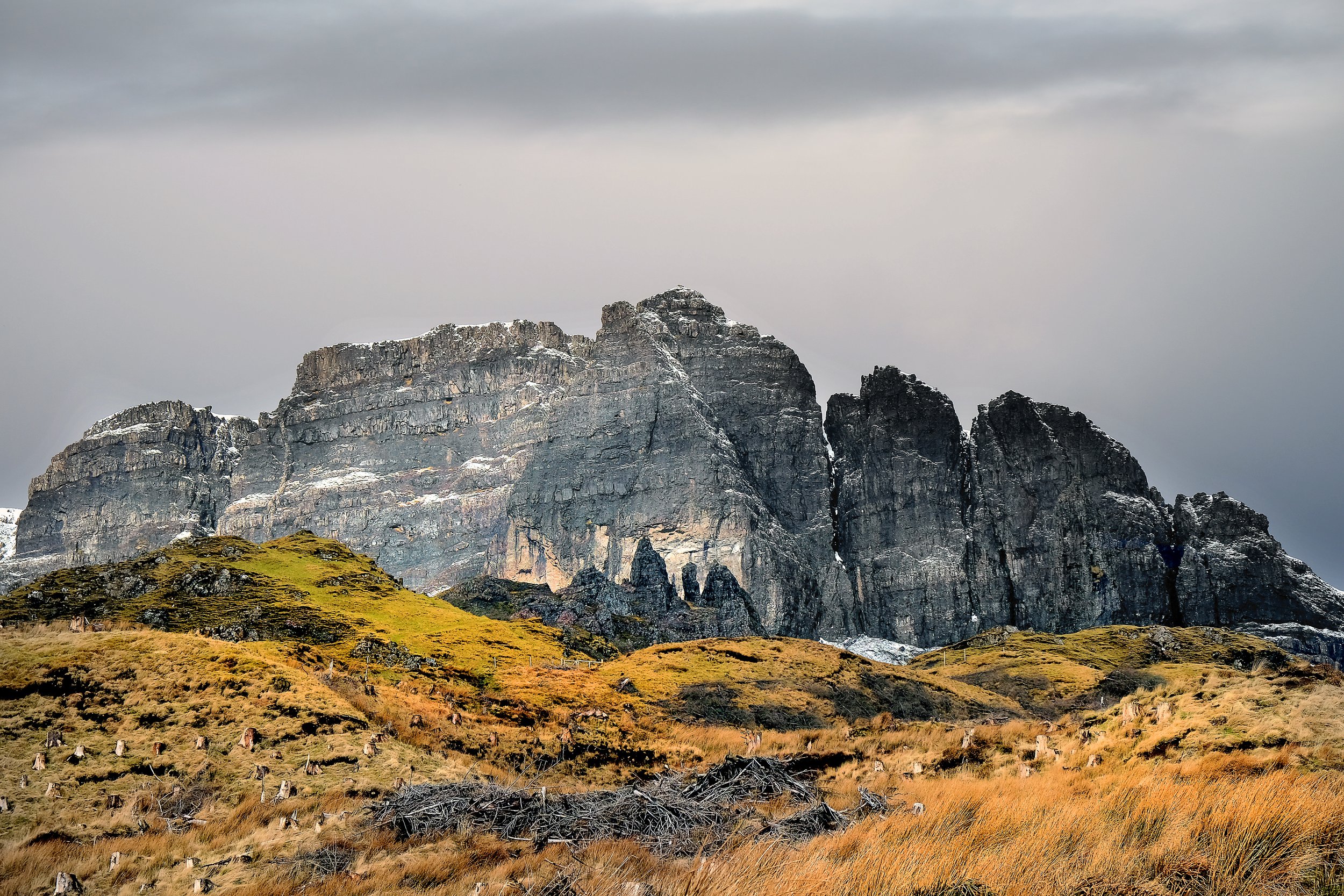
There are places that announce themselves long before you reach them. The Old Man of Storr (or as a friend once said, “the old man at the store”) is one of those. You see ‘him’ from the road first, rising sharply from the slope as if the land itself has paused mid-gesture. Even at a distance, there is a sense of scale that feels slightly unreal. He does not belong to the landscape so much as interrupt it.
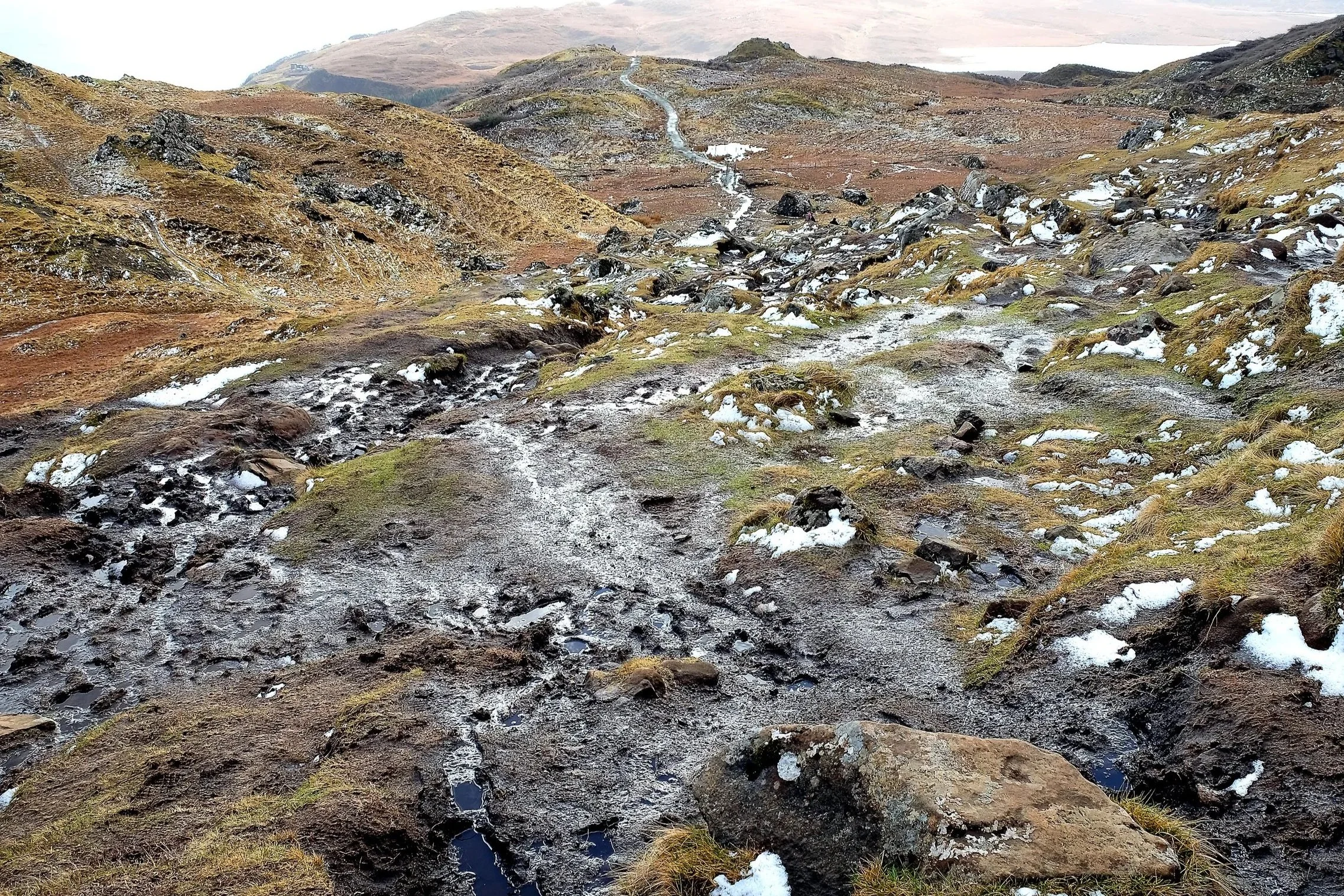
The walk up is steady rather than dramatic. A path worn smooth by thousands of feet leads you higher, the ground softening underfoot as the air cools. Around you, the land opens and closes again, folds of green broken by rock and sudden drops. It’s not hard to imagine how this place might once have felt dangerous or unknowable, particularly before the path existed, before it became a destination rather than a feature to be avoided.
Copyright © contact for usage rights.
Up close, nothing is singular
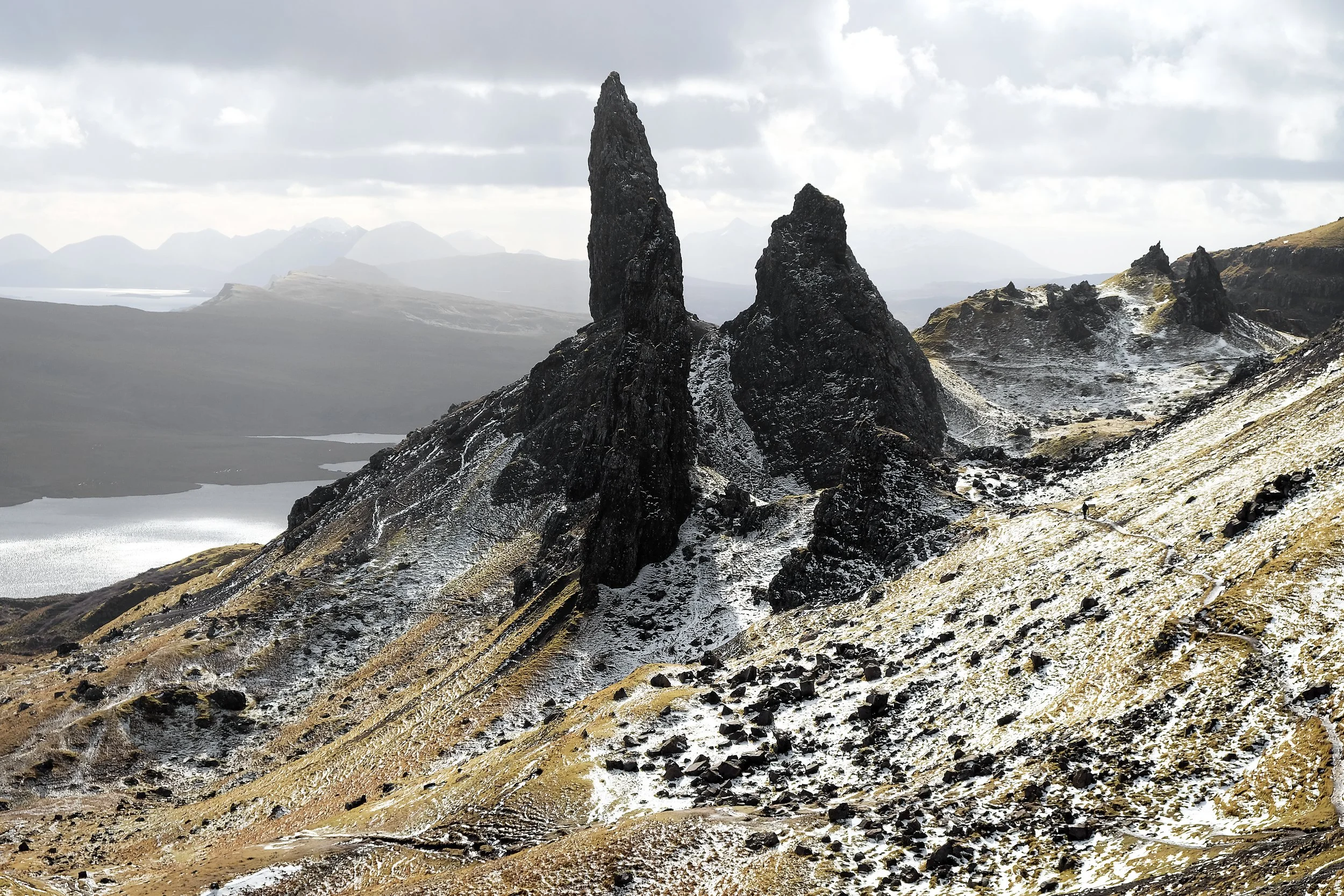
As you get closer, the Old Man begins to lose his clean silhouette. What looked like a single structure resolves into fragments and spines of rock, each jutting at a slightly different angle. He is not one thing but many, held together by distance and perspective.
Up close, the stone feels raw and exposed. Its surfaces are shaped by time rather than intention, marked by weather and movement rather than design. The closer you stand, the less tidy it becomes.
Copyright © contact for usage rights.
A landscape shaped by collapse
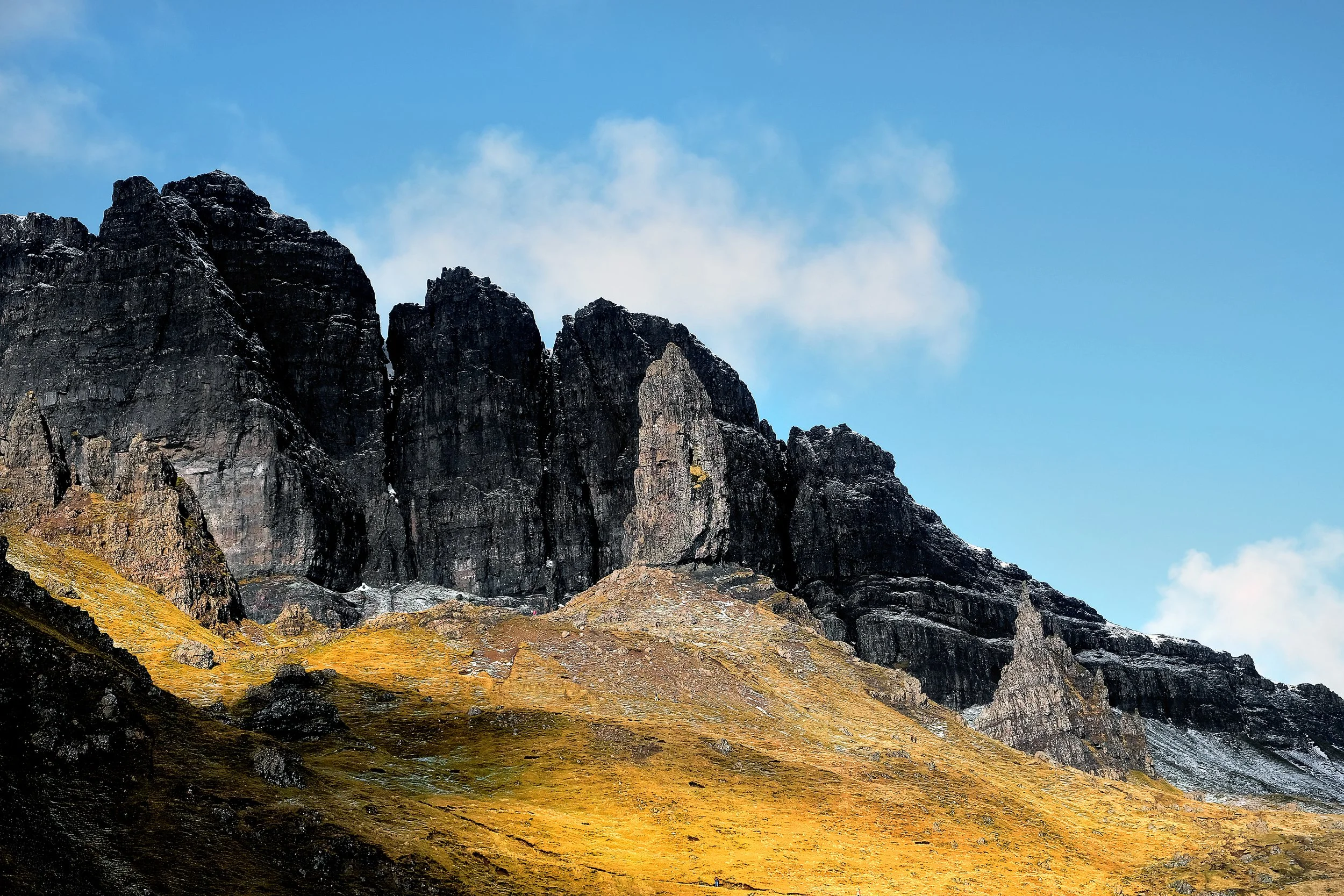
Geologically, the Old Man of Storr is part of the Trotternish landslip, one of the largest in Britain. Millions of years ago, layers of volcanic rock slipped over softer sediment beneath, leaving behind the sharp pinnacles and stepped ridges that now define this part of Skye.
It was not a single dramatic collapse. The land shifted gradually, incrementally, until it settled into something new. What we see now is not the result of destruction alone, but of movement.
Copyright © contact for usage rights.
The giant beneath the ground
Geology rarely tells the whole story. People have always looked at this rock and seen something more than erosion and pressure.
According to local folklore, the Old Man of Storr is said to be the thumb of a giant, buried beneath the earth. Other versions tell of a giant laid to rest here, his body forming the landscape, his thumb still breaking the surface. The details change, but the idea remains the same. This place is not accidental. It’s the remnant of something once alive.
Standing beneath it, the myth doesn’t feel far-fetched. The rock towers above you, yet it also feels close, almost intimate. It’s easy to imagine it moving once, long ago, or watching, or waiting. The instinct to assign meaning feels natural here.
Copyright © contact for usage rights.
Permanence and impermanence
What strikes most is how exposed the Old Man of Storr is. He stands apart from the ridge, separated from the surrounding formations as if deliberately placed. There is no sense of shelter. Wind moves freely around him, and the light changes constantly, shifting the stone from pale grey to deep shadow within minutes.
On some days, he feels immovable. On others, fragile. As though one more shift of the land might return him to the ground.
This tension between permanence and impermanence gives the place its power. The Old Man has stood for thousands of years, yet he exists because the land failed. Collapse created something iconic.
Looking outward
From the ridge, the wider landscape opens up. The sea lies calm below, islands layered faintly on the horizon. It’s a reminder that this rock is not isolated. It belongs to a much larger system shaped by ice, water, and pressure long before any story was told about it.
The myths don’t contradict the science. They sit alongside it. One explains how the land moved. The other explains how it feels.
Photographs often focus on the Old Man’s outline against the sky. It’s a striking image, but it flattens something essential. What the camera cannot fully capture is the sense of proximity, the way the rock looms when you stand beneath it, or how small you feel without feeling diminished.
A place that watches rather than speaks
Perhaps that’s why the stories endure. Not because they are literal truths, but because they offer a way to relate to something otherwise beyond us. A giant’s thumb is easier to grasp than millions of years of geological movement. It gives the land a body, a presence we can acknowledge.
When you leave, the Old Man of Storr remains visible for a while, receding slowly as the path winds downward. Eventually, the land folds again and he disappears from view. It feels less like leaving a landmark and more like turning away from a witness.
Some places demand explanation. Others simply ask to be noticed.
Six facts about the Old Man of Storr
The Old Man is part of the Trotternish landslip, the largest landslip in Britain, formed by ancient geological movement rather than erosion alone.
The rock is made primarily of basalt, a volcanic stone created by lava flows millions of years ago.
Despite its solid appearance, the formation is constantly weathering, shaped by wind, rain, and freezing temperatures.
The name “Old Man” likely refers to its human-like silhouette, especially when viewed from a distance.
Local folklore describes it as the thumb of a buried giant, with variations of the story passed down through generations.
The surrounding ridge continues to shift slowly over time, meaning the landscape is still changing today.
